Ginger Lemon Kombucha: A Simple Second Fermentation Recipe
Ginger lemon kombucha is one of those combinations I keep coming back to — not because it’s the most exciting flavour I’ve ever made, but because it’s simple, practical, and always refreshing.
Fresh ginger gives the kombucha a little warmth and bite, while lemon keeps everything bright and clean. And unlike some fruit combinations, there’s very little prep involved.
It’s also a flavour I can make almost any time because I usually have fresh ginger and a bottle of lemon juice in the fridge.
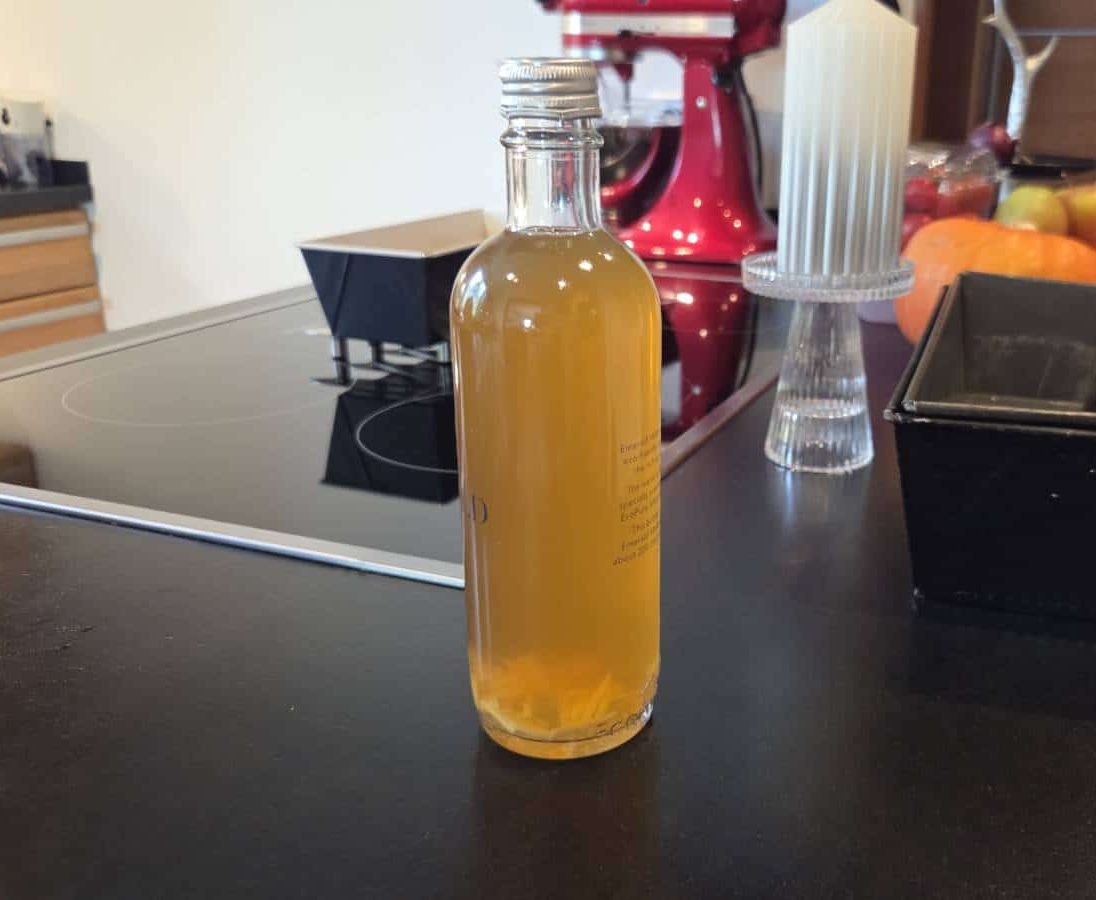
My latest batch wasn’t the fizziest kombucha I’ve ever made, though. Lemon and ginger don’t add much sugar on their own, so if your first ferment is already quite dry, adding a small amount of sugar during second fermentation can help give the yeast something extra to work with.
Here’s how I make it.
What You Need
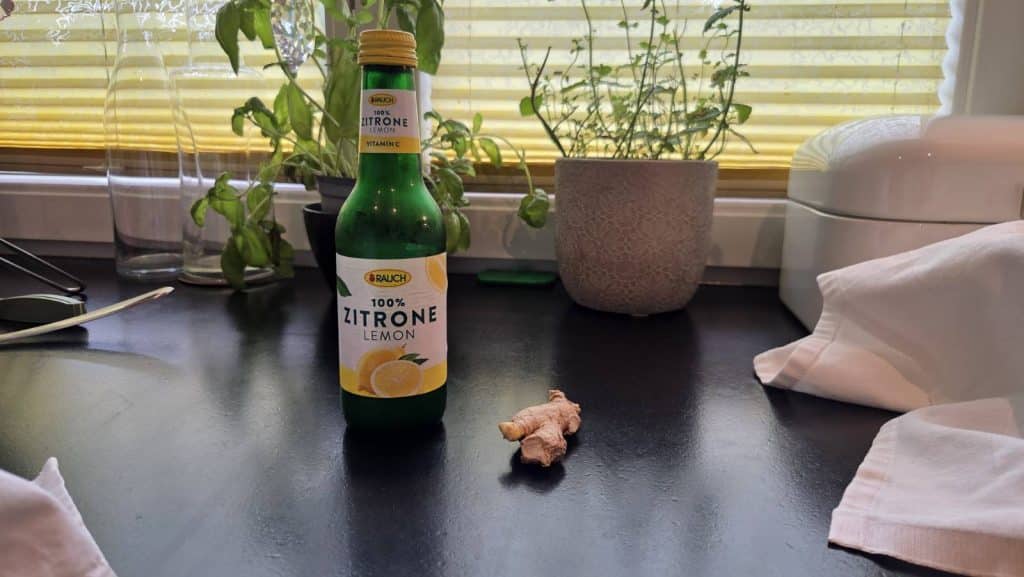
Per 500ml bottle:
- 1 thumb of fresh ginger (approximately 2–3cm), thinly sliced
- 1 tablespoon lemon juice
- 500ml finished first ferment kombucha
- ½ teaspoon sugar, optional for extra carbonation
- 1 pressure-safe flip-top bottle with an intact gasket
That’s it.
I usually use bottled 100% lemon juice simply because I always have it in the fridge. Freshly squeezed lemon works beautifully too and can give the kombucha a slightly brighter citrus aroma. Use whichever is most practical for you.
A note on the ginger
I prefer thin slices rather than grated ginger.
Grated ginger works, but all those tiny pieces make the kombucha more difficult to pour and strain later. Thin slices still provide plenty of surface area for flavour and are easy to remove when serving.
Do you need to add sugar?
Not necessarily.
Your finished first ferment still contains some residual sugar, and sometimes that’s enough to produce plenty of carbonation during second fermentation.
But ginger and lemon don’t contribute much additional sugar compared with flavours like mango, pineapple, berries, or fruit juice.
If your kombucha tends to come out flat — or your first ferment is already fairly dry — try adding ½ teaspoon of sugar per 500ml bottle.
This small amount gives the remaining yeast another source of fermentable sugar and can help encourage carbonation.
Keep in mind that more fermentable sugar can also mean more pressure inside the bottle, so check your bottles regularly and refrigerate them once you’re happy with the carbonation.
How to Make Ginger Lemon Kombucha
Step 1 — Finish your first fermentation
Your kombucha should taste pleasantly tart while still having a little sweetness left. If it tastes mostly like sweet tea, give the first fermentation another day or two.
If it has become extremely sour and vinegar-like, it can still be useful as starter liquid for your next batch, but it isn’t ideal for this recipe.
Before bottling, reserve your SCOBY along with enough finished kombucha to use as starter liquid for your next batch.
One more useful tip: don’t worry if you see some yeast collecting near the bottom of your brewing jar. Those yeasts play an important role in carbonation. Before bottling, give the finished kombucha a gentle stir to distribute the yeast more evenly.
Step 2 — Check your bottles
Use bottles designed to handle carbonated drinks.
Make sure your flip-top bottles are clean and inspect the rubber gaskets before filling them. Worn, cracked, or poorly sealing gaskets are a common reason homemade kombucha stays flat because the carbon dioxide can escape instead of building up inside the bottle.
Don’t use thin decorative glass bottles or jars that aren’t designed for pressure.
Step 3 — Add the ginger and lemon
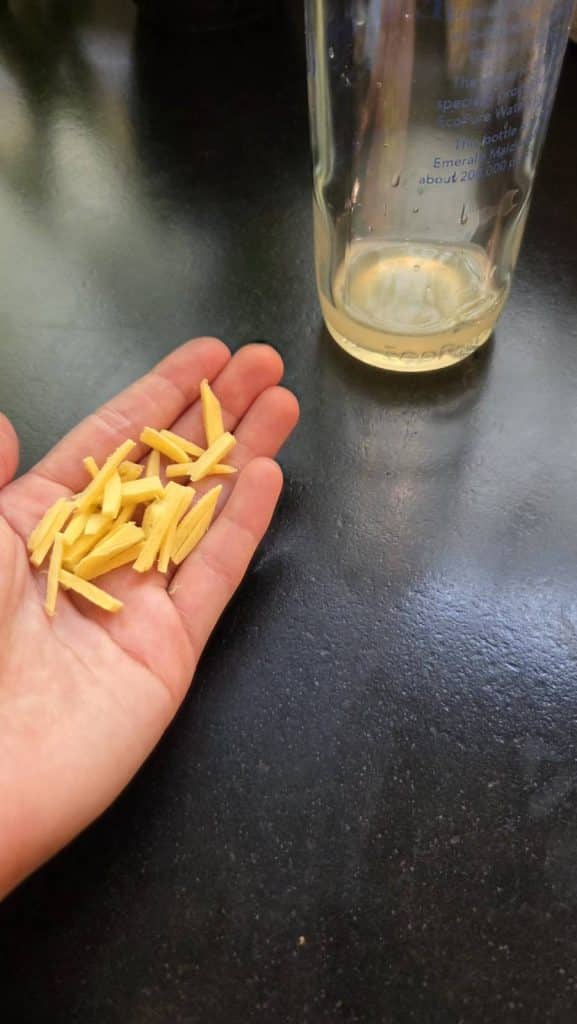
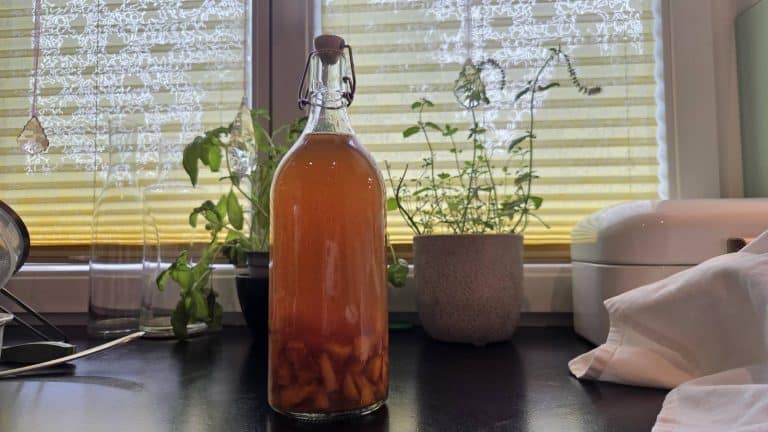
Add the thinly sliced ginger and one tablespoon of lemon juice directly to each 500ml bottle.
If you’re adding extra sugar for carbonation, add ½ teaspoon now.
You can use freshly squeezed lemon juice here, but I normally use bottled lemon juice. It’s convenient, consistent, and means I can make this flavour whenever I have a batch of kombucha ready.
Step 4 — Fill the bottles
Leave a small amount of headspace at the top, roughly 2–4cm. You don’t need to measure it precisely — just avoid filling the bottle right to the rim.
Close the bottle securely.
If you’ve added sugar, gently turn the sealed bottle a few times to help dissolve it. There’s no need to shake it vigorously.
Step 5 — Second ferment
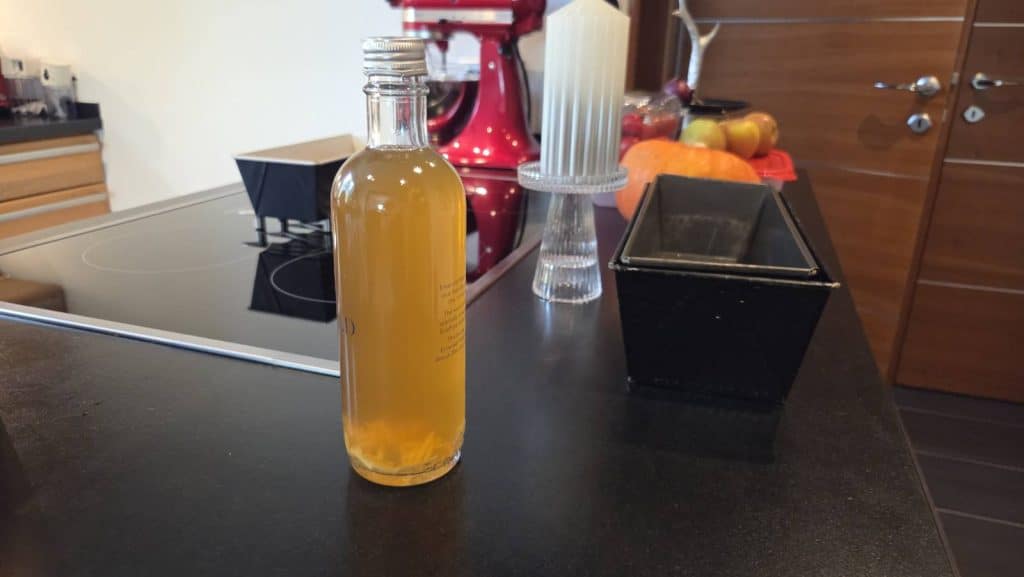
Leave the sealed bottles at room temperature for around 1–3 days to start.
A warm kitchen will usually carbonate kombucha faster than a cool one.
Around 21–26°C is a useful range, but don’t worry about hitting an exact temperature. Just remember that fermentation happens considerably more slowly in a cold kitchen.
I keep mine on the kitchen counter away from direct sunlight.
Step 6 — Check the carbonation
Start checking from around day two, especially if your kitchen is warm or you’ve added extra sugar.
Carefully crack open one bottle over the sink.
If you hear a good hiss and see bubbles rising through the kombucha, you’re getting there.
If there’s barely any pressure, close it again and give it another day.
Opening the bottles repeatedly releases some of the carbon dioxide you’re trying to capture, so I don’t fully open every bottle every day just to check them.
Carbonation is one of the least predictable parts of homemade kombucha. Two batches made almost exactly the same way can behave differently depending on temperature, residual sugar, yeast activity, and even how much yeast made it into each bottle.
Step 7 — Refrigerate
Once you’re happy with the carbonation, move the bottles to the refrigerator.
Cold temperatures dramatically slow fermentation and make the bottles much easier to open without sending kombucha all over your kitchen.
I like to chill mine thoroughly before opening — ideally for at least several hours.
Step 8 — Open carefully and enjoy
Always open second-fermented kombucha cold and over the sink.
Open the flip top slowly rather than popping it open all at once.
If your kombucha is very lively, release a little pressure, pause, and then continue opening.
Pour through a small strainer if you’d like to remove the ginger slices before drinking.
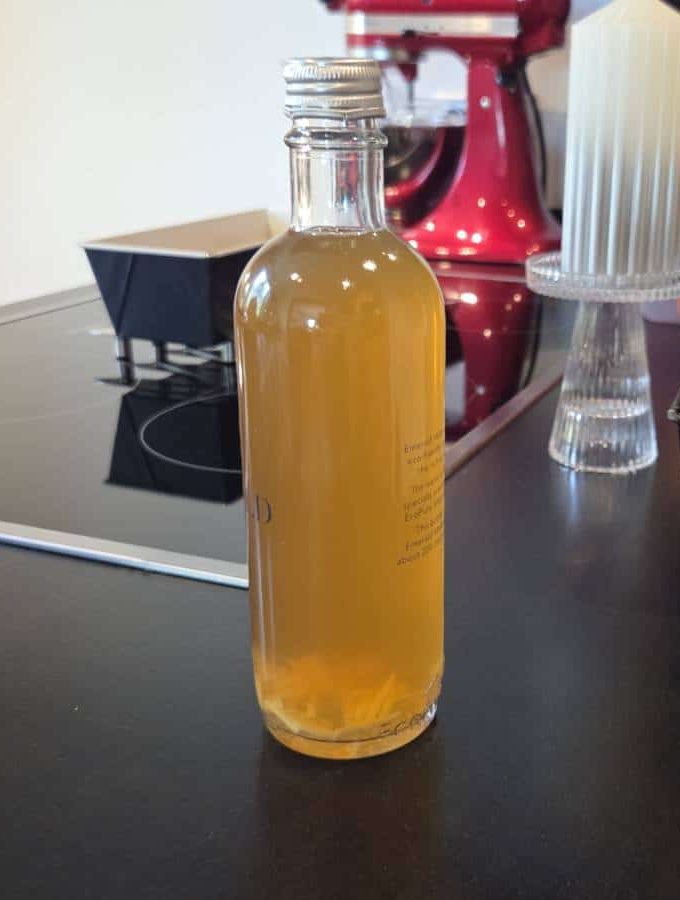
- 500 ml finished first ferment kombucha
- 1 thumb fresh ginger 2-3 cm, sliced thin
- 1 tbsp lemon juice, bottled or freshly squeezed
- ½ tsp sugar optional for extra carbonation
- Remove the SCOBY and reserve it with enough finished kombucha to use as starter liquid for your next batch.
- Check that your flip-top bottle is clean and the gasket is intact and seals properly.
- Add the sliced ginger, lemon juice and optional sugar to the bottle.
- Pour in the kombucha, leaving around 2–4 cm of headspace. Seal firmly and gently turn the bottle a few times if you added sugar.
- Leave at room temperature for 1–3 days. Start checking carbonation around day two, or earlier in a warm kitchen.
- Once the carbonation is where you want it, move the bottle to the refrigerator and chill thoroughly.
- Open cold and slowly over the sink. Strain out the ginger slices when pouring if preferred.
Summer (above 24°C): start checking after 24 hours; 24–36 hours is often enough.
Spring and autumn (20–23°C): around 2–3 days.
Winter (below 20°C): around 3–5 days. For more carbonation: If your first ferment is already quite dry, add ½ teaspoon sugar per 500ml bottle. To serve: Strain out the ginger slices when pouring for a cleaner result, or leave them in for a stronger ginger flavour. Safety: Use bottles designed for carbonated drinks and refrigerate once you’re happy with the carbonation.
Why Isn’t My Ginger Lemon Kombucha Fizzy?
If your ginger lemon kombucha comes out flatter than expected, don’t immediately assume something went wrong.
My own batch for this recipe wasn’t particularly fizzy either.
Several things affect carbonation.
There wasn’t much sugar left
Yeast needs fermentable sugar to produce carbon dioxide.
If your first ferment went quite far and tasted fairly dry before bottling, there may simply have been less sugar available for the second fermentation.
Lemon and ginger contribute very little additional sugar compared with sweeter fruit or fruit juice.
Next time, try adding ½ teaspoon of sugar per 500ml bottle.
Your kitchen was cool
Temperature makes a big difference.
A bottle that becomes nicely carbonated within a day or two during summer might need considerably longer in a cool winter kitchen.
Your bottle wasn’t completely airtight
Even a small leak around the gasket can let carbon dioxide escape.
If one bottle consistently stays flat while the others carbonate normally, check the seal.
The yeast wasn’t evenly distributed
Yeast often settles toward the bottom of the brewing vessel.
That means bottles filled from different parts of the same batch can sometimes carbonate differently.
Before bottling, you can gently stir your finished kombucha to distribute the yeast more evenly. You don’t need to vigorously mix it — just a gentle stir is enough.
If you’re regularly struggling with carbonation, read my guide on why kombucha isn’t fizzy and how to fix it.
Ginger Lemon Kombucha Variations
Once you’ve made the basic version, it’s easy to adjust.
More ginger
If you want a stronger ginger kick, increase the ginger to around 4–5cm per bottle.
I’d keep the lemon amount roughly the same and simply let the ginger become the dominant flavour.
Fresh lemon
If you normally use bottled lemon juice like I do, try the same recipe with freshly squeezed lemon.
The difference isn’t enormous, but fresh lemon tends to give the kombucha a brighter citrus aroma.
Lemon, ginger and turmeric
Add a thin slice of fresh turmeric with the ginger.
It adds a subtle earthy flavour and gives the kombucha a beautiful golden colour.
Be aware that fresh turmeric also stains almost everything it touches.
Lime and ginger
Swap the lemon juice for lime juice.
It’s just as simple but produces a slightly different citrus flavour that’s particularly refreshing in summer.
Ginger only
Skip the lemon completely and increase the ginger slightly.
Simple ginger kombucha is clean, spicy, and very easy to make.
How Long Should Ginger Lemon Kombucha Second Ferment?
There isn’t one perfect fermentation time.
Temperature, the amount of sugar remaining in your kombucha, the activity of your yeast, and whether you’ve added extra sugar all make a difference.
As a rough guide:
Warm kitchen, around 24–26°C: Start checking after about 24 hours.
Average kitchen, around 20–23°C: Around 2–3 days is often enough.
Cool kitchen, below 20°C: Carbonation can take longer.
Rather than following the calendar exactly, pay attention to your bottles.
Once you’re getting good carbonation, move them to the refrigerator rather than leaving them sealed at room temperature indefinitely.
A Note on Bottle Safety
Second fermentation traps the carbon dioxide produced by the yeast inside a sealed bottle. That’s exactly what creates the fizz — but it also creates pressure.
A few simple habits make the process much safer.
Use pressure-safe bottles. Flip-top bottles designed for carbonated drinks are a good choice. Avoid thin glass bottles and decorative jars.
Check your gaskets. Replace any that are cracked, brittle, or no longer seal properly.
Don’t forget about fermenting bottles. Once you have the carbonation you want, move them to the refrigerator.
Be particularly careful when adding extra sugar. More fermentable sugar can mean faster CO₂ production.
Open kombucha cold. Warm bottles tend to foam much more aggressively.
Open slowly and over the sink. Even a batch that didn’t seem very active the previous day can sometimes surprise you.
Simple, Practical and Always Refreshing
Ginger lemon isn’t my most adventurous kombucha flavour, and I wouldn’t say it’s my absolute favourite either.
But that’s partly why I like it.
I almost always have ginger and lemon juice at home. There’s very little chopping, no fruit puree to clean out of the bottles, and the flavour works well with the natural tartness of kombucha.
The ginger gives it warmth and a little spice. The lemon keeps it fresh and bright.
And when I have a batch ready for second fermentation but don’t feel like experimenting, ginger lemon is an easy choice that I know I’ll enjoy.
Sometimes that’s exactly what I want from homemade kombucha.
Want to understand second fermentation in more detail? Read my complete guide to kombucha second fermentation for carbonation, timing, bottle safety, flavour ideas, and troubleshooting.
New to kombucha? Start with my complete beginner’s guide to brewing kombucha at home.