Mango Chilli Kombucha — Sweet Heat Second Ferment
This is the recipe that gets the most raised eyebrows.
Mango chilli kombucha sounds like the kind of thing someone came up with to be interesting rather than because it actually tastes good. I thought the same thing the first time I heard about it. Then I tried it and understood immediately why it works.
The mango provides sweetness and a tropical depth that pairs surprisingly well with the natural tang of kombucha. The chilli adds a slow, building warmth at the back of the throat — not an aggressive heat, just enough to make the drink feel more alive than a purely sweet second ferment. Together they produce something that’s difficult to describe to someone who hasn’t tried it but immediately makes sense the moment they do.
It’s become one of the combinations I return to regularly, especially in summer when the heat of the drink feels right against the heat outside.
What You Need

Per 500ml bottle:
- 500ml finished first ferment kombucha
- 60–80g ripe mango, cut into small cubes (fresh or frozen, thawed)
- 1 small slice of fresh red chilli (approximately 1cm), seeds removed
- 1 flip-top bottle with intact gasket
On the mango: Ripe mango is essential here. Underripe mango is too fibrous, too tart, and contributes very little sweetness or flavour to the ferment. A ripe mango should smell sweet and tropical and give slightly when pressed. Frozen mango works well; thaw it completely before using.
On the chilli: Fresh red chilli gives a cleaner heat than dried chilli flakes, which can produce an unpleasant bitterness in fermentation. Remove the seeds; they contain most of the aggressive heat and can make the result uncomfortably spicy. A 1cm slice of deseeded red chilli per 500ml is enough for a noticeable but pleasant warmth. If you want more heat, increase gradually. It’s easier to add more next batch than to fix an overly spicy bottle.
One thing to know before you start: Capsaicin (the compound that makes chilli hot) intensifies during fermentation. A chilli slice that seems mild when you add it will produce noticeably more heat in the finished bottle. Start conservative.
How to Make Mango Chilli Kombucha
Step 1 — Prepare the mango

Cut the mango into small cubes, roughly 1–2cm pieces. Smaller pieces give you more surface area in contact with the kombucha, which means better flavour extraction. No need to puree or blend it.
Step 2 — Prepare the chilli

Slice a 1cm piece from a fresh red chilli and remove the seeds. A clean slice rather than roughly torn pieces gives more consistent heat since you can control the size precisely.
Step 3 — Add to the bottle

Add the mango cubes first, then the chilli slice on top. Adding the chilli on top rather than burying it under the mango makes it easier to retrieve if you want to remove it partway through fermentation to reduce the heat.
Step 4 — Fill the bottles

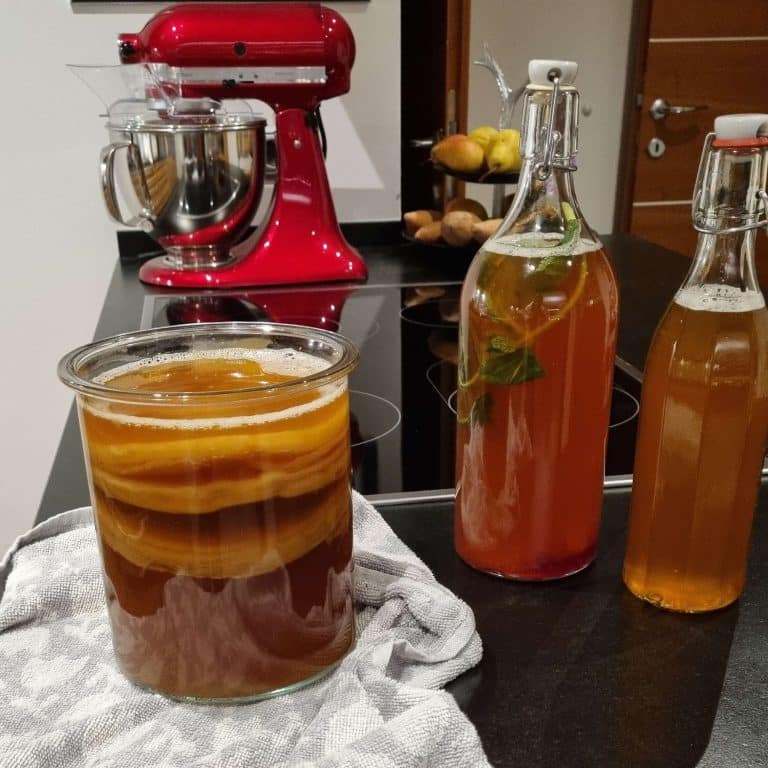
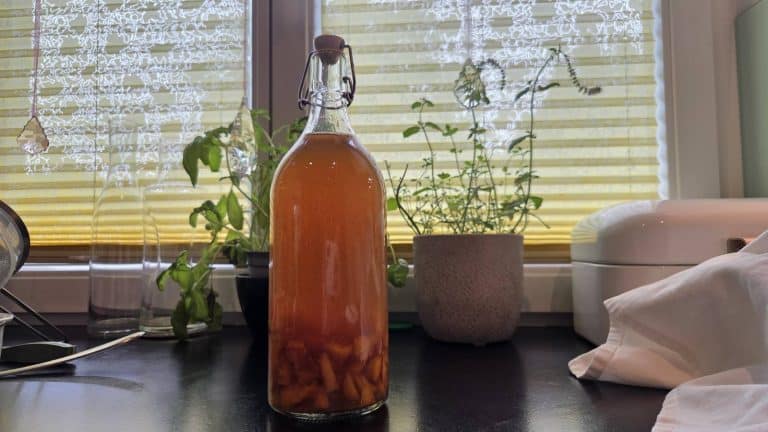
Pour your finished first ferment kombucha over the fruit, leaving 2–3cm of headspace at the top. The mango will begin colouring the liquid almost immediately. A note from experience — if you’re a little short on kombucha liquid and can’t fill the bottles quite high enough, don’t worry too much. This batch made with lower fill levels still carbonated well after an extra day or two.
Step 5 — Seal and store

Seal firmly and store somewhere warm between 21°C and 27°C. Mango is high in natural sugars and ferments reliably and vigorously.
Step 6 — Check from day two
Open each bottle just a crack over the sink from day two. Mango second ferments often carbonate quickly. Strong carbonation by day two is common in summer conditions. Check the heat level at the same time: if it’s already spicier than you want, open the bottle fully, remove the chilli slice, reseal and refrigerate.
Step 7 — Refrigerate and strain
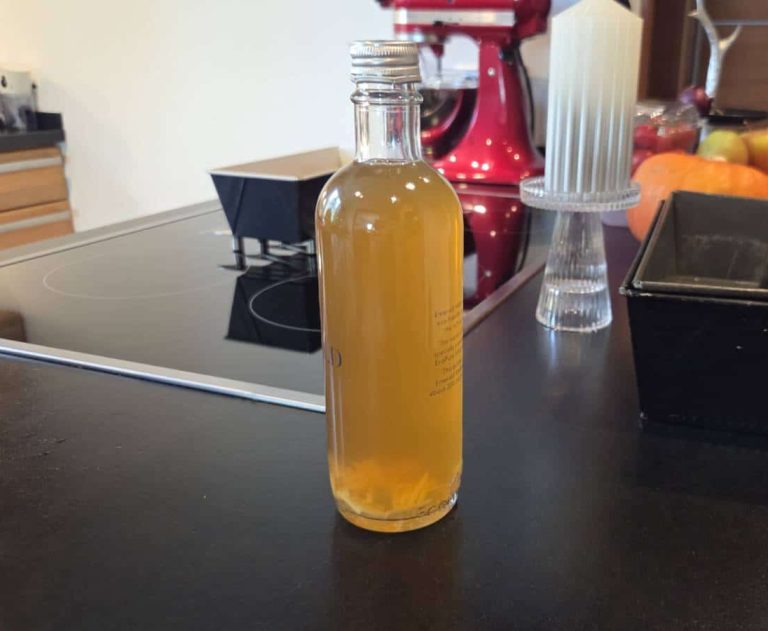
Once carbonated and at your preferred heat level, refrigerate immediately. Strain through a fine mesh strainer when pouring. The finished kombucha will be golden-orange with a warm, tropical aroma.

- 500 ml finished first ferment kombucha
- 60-80 g ripe mango cut into small cubes
- 1 slice fresh red chilli 1cm, seeds removed
- Cut the mango into small cubes roughly 1-2cm in size for maximum surface area and flavour extraction.
- Slice a 1cm piece from a fresh red chilli and remove the seeds completely.
- Add the mango cubes to the bottle first, then place the chilli slice on top. Adding the chilli on top makes it easier to remove partway through if needed.
- Fill with kombucha leaving 2-3cm headspace at the top.
- Seal firmly and store somewhere warm between 21°C and 27°C.
- From day two check carbonation and heat level daily by opening just a crack over the sink. If the heat is already stronger than you want, remove the chilli slice, reseal and refrigerate.
- Once well carbonated refrigerate immediately. Open cold over the sink and strain through a fine mesh strainer when pouring.
Summer (above 24°C): ready in 24-48 hours.
Spring and autumn (20-23°C): 2-3 days.
Winter (below 20°C): 3-4 days.
If it is too spicy, dilute with plain finished kombucha or pour over ice.
Managing the Heat
The chilli is the only variable in this recipe that requires active management. Here’s how to control it:
For mild heat: Use a 0.5cm slice of chilli, seeds fully removed. Check at 24 hours. Remove the chilli after fermentation and before refrigerating.
For medium heat: Use a 1cm slice, seeds removed. Leave the chilli in for the full fermentation time.
For strong heat: Use a 1.5–2cm slice or leave some seeds in. Only recommended if you genuinely love spicy food — fermentation amplifies heat significantly.
If it’s too spicy: You can’t reduce the heat once it’s in the bottle, but you can dilute it. Pour the finished kombucha over ice and add a small amount of plain finished first ferment kombucha to balance. Or use it as a cocktail mixer. Maybe try mango chilli kombucha with tequila and lime.
Variations Worth Trying
Mango and ginger: Replace the chilli with a thin slice of fresh ginger. Less unusual than the chilli version but delicious in its own right. The ginger provides warmth without the capsaicin heat.
Mango and lime: Add a teaspoon of fresh lime juice alongside the mango and skip the chilli entirely. Tropical and bright, very easy to drink.
Mango, chilli and lime: All three together. The lime cuts through the sweetness of the mango and brightens the whole combination. Add half a teaspoon of lime juice per bottle alongside the mango and chilli.
Pineapple and chilli: Substitute the mango for an equal amount of fresh pineapple. More acidic than mango, produces excellent carbonation, and the sweet-heat combination works equally well.
Timing
Mango ferments vigorously because of its high natural sugar content.
Summer (above 24°C): Check from day one. Ready in 24–48 hours. Monitor the chilli heat daily. Spring and autumn (20–23°C): 2–3 days typically. Winter (below 20°C): 3–4 days. The heat from the chilli makes this a surprisingly good cold-weather drink too.
Open carefully — mango second ferments build strong carbonation. Always open cold, slowly, over the sink.
I gifted one of the bottles to a friend, and they were not careful when opening and the kombucha went up to the ceiling.
If you’re getting consistently flat results, read my guide to why kombucha has no fizz.
Why This Combination Works
Mango and chilli is a pairing with a long culinary history — it appears in Mexican, Thai and Indian cuisines in various forms, usually as a contrast between sweetness and heat. The same logic applies in kombucha.
The kombucha itself adds a third dimension: the natural acidity and tang of the fermented base act as a bridge between the sweet mango and the hot chilli in a way that plain fruit juice wouldn’t. The result is a drink with complexity — sweet, sour, tropical and warm all in one.
It’s also one of the most interesting drinks to serve to people who think kombucha is too tart or too plain. The mango sweetens and softens the base flavour. The chilli makes it memorable. Almost everyone who tries it asks for the recipe.
For a different kind of flavour adventure, try my blueberry lavender kombucha — floral and beautiful rather than bold.
Or for the combination when I can’t be bothered and always come back to, read my ginger lemon kombucha recipe.
New to second fermentation? My complete beginner’s guide covers everything you need.
Sources
Crum, H., & LaGory, A. (2016). The big book of kombucha. Storey Publishing.
Jayabalan, R., Malbaša, R. V., Lončar, E. S., Vitas, J. S., & Sathishkumar, M. (2014). A review on kombucha tea — microbiology, composition, fermentation, beneficial effects, toxicity, and tea fungus. Comprehensive Reviews in Food Science and Food Safety, 13(4), 538–550. https://doi.org/10.1111/1541-4337.12072