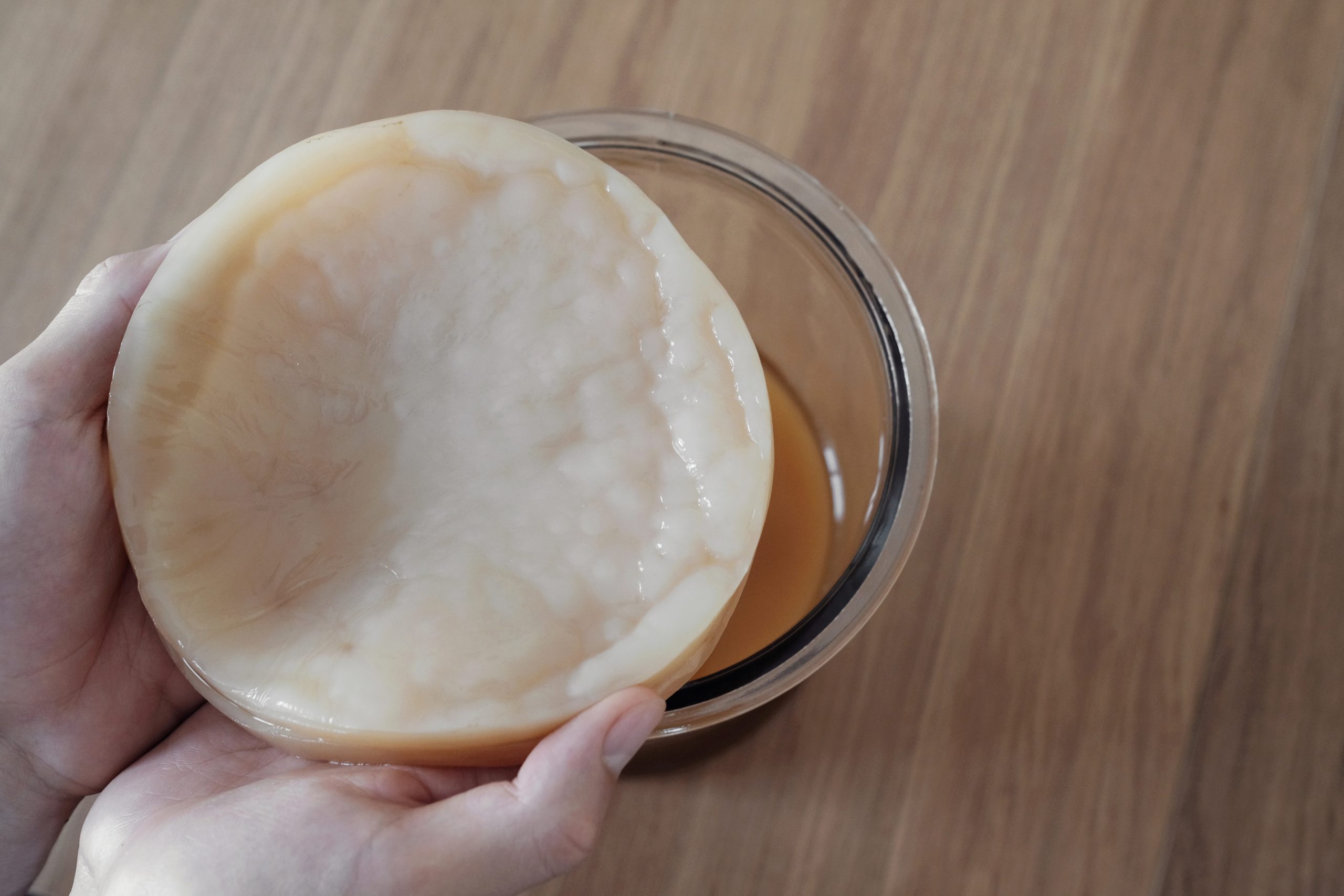
What Is a kombucha SCOBY and How Do You Look After It?
If you’ve just started brewing kombucha, or you’re about to, you’ve probably spent a fair amount of time staring at your SCOBY, wondering if it’s supposed to look like that.
The answer, almost always, is yes.
SCOBYs are strange-looking things. They grow unevenly, develop brown patches, sprout stringy bits underneath, and generally look like something you wouldn’t want to find in your kitchen. But behind that unnerving appearance is a remarkably resilient living culture that will produce batch after batch of great kombucha if you treat it well.
This post covers everything: what a SCOBY actually is, what it does during fermentation, what healthy and unhealthy look like, and exactly how to keep yours in good shape for the long term.
If you haven’t brewed your first batch yet, start with my complete beginner’s guide first. This post assumes you already have a SCOBY and want to understand it better.
What Does Kombucha SCOBY Actually Stand For?
SCOBY stands for Symbiotic Culture of Bacteria and Yeast. It’s not a single organism; it’s a community of different bacteria and yeast strains living together in a structure made primarily of bacterial cellulose (Jayabalan et al., 2014).
Each component plays a role. The yeast strains break down sugar into alcohol and CO2. The bacteria then convert that alcohol into organic acids (primarily acetic acid and gluconic acid), which give kombucha its characteristic tang. The cellulose matrix holds the whole community together and floats on the surface of your brew, protecting the fermentation below from contamination (Villarreal-Soto et al., 2018).
The result of all this activity is a drink that’s low in residual sugar, lightly acidic, and full of live cultures.
What Does a SCOBY Look Like?
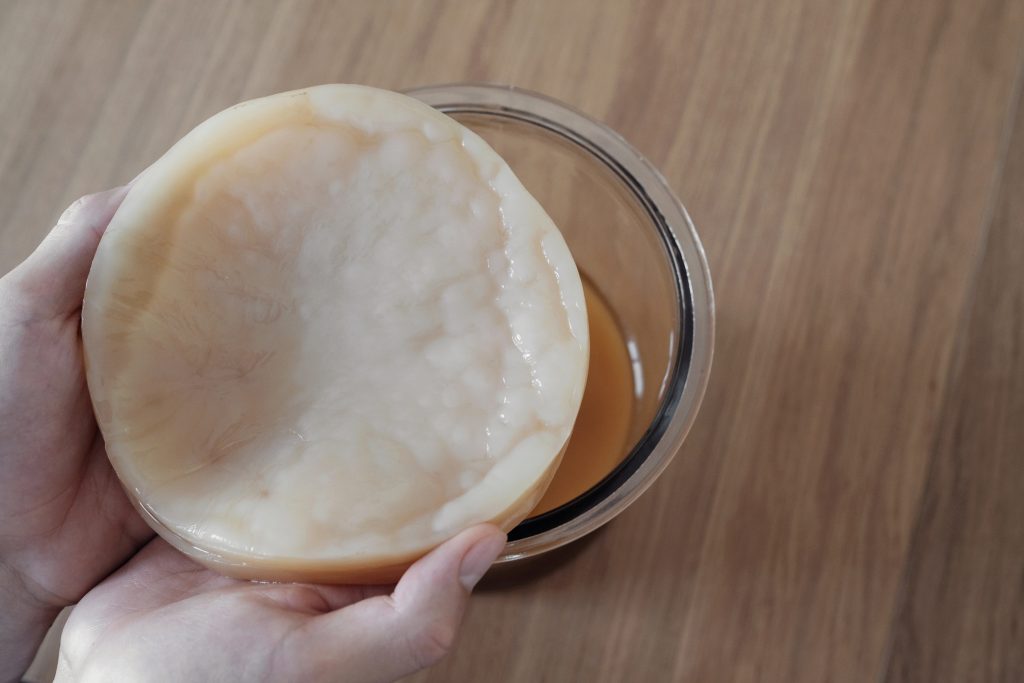
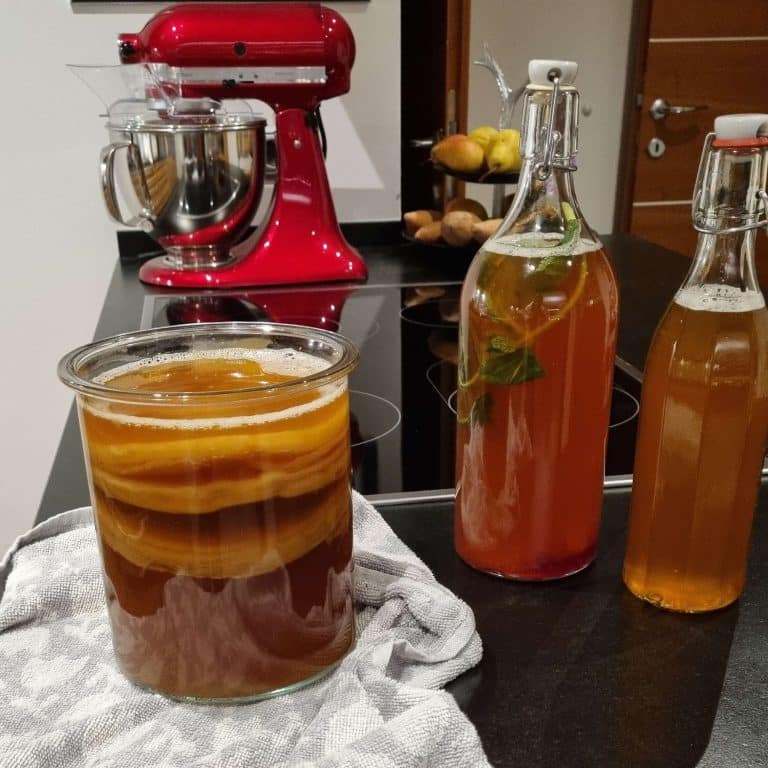
A healthy SCOBY is pale to medium tan in colour, rubbery in texture, and roughly disc-shaped, though the shape becomes more irregular with age. It floats on the surface of the liquid and grows a new layer with every batch.
Here’s what you’ll notice as it ages:
Colour. A fresh SCOBY from a first batch tends to be pale and almost translucent. Over successive batches, it darkens to tan and eventually brown. This is completely normal; the colour comes from the tea and yeast activity, not from anything going wrong.
Brown patches and spots. Very common, especially on older SCOBYs. These are areas of heavier yeast activity. Not a problem.
Holes. SCOBYs sometimes develop holes or gaps as they grow. Again, normal. The structure doesn’t need to be solid to be healthy.
Uneven thickness. One side thicker than the other, or lumpy growths on the surface, are all within normal range. SCOBYs grow where conditions are right, not uniformly.
Brown strands underneath. These are yeast strands hanging in the liquid. Completely harmless, very common, and actually a sign of active fermentation (Marsh et al., 2014).
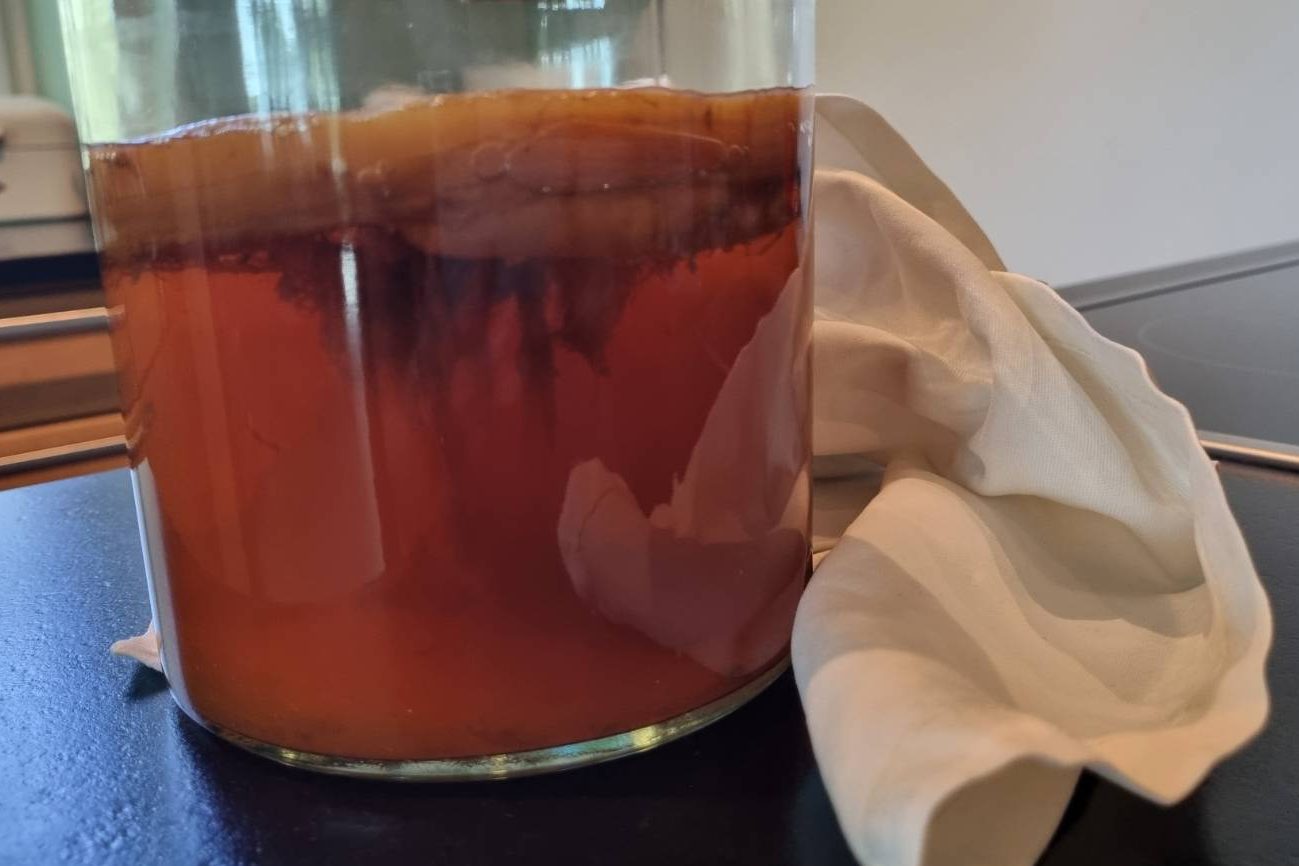
Layers. After several batches, your SCOBY will be a thick stack of fused layers. The top layers are the newest and most active. The bottom layers are older.
What Does an Unhealthy SCOBY Look Like?
There is really only one thing to look for: fuzzy mould on the top surface.
Fuzzy growth — green, black, pink, or white and fluffy — on the exposed top surface of the SCOBY is mould. The keyword is fuzzy. This is different from the flat brown patches and dark spots that naturally appear on healthy SCOBYs due to tea tannins and yeast activity, and it’s also different from the brown yeast strands underneath, which are smooth and stringy rather than fuzzy.

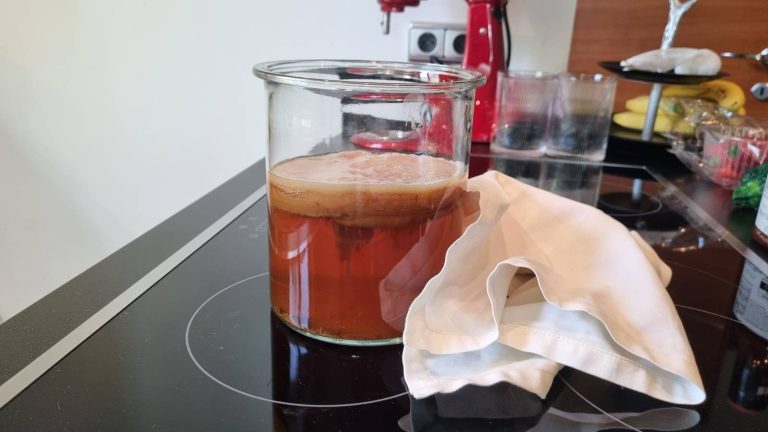
The photo above shows my SCOBY after several batches, dark, thick, and not exactly pretty. Everything you see there is normal.
This one is different:
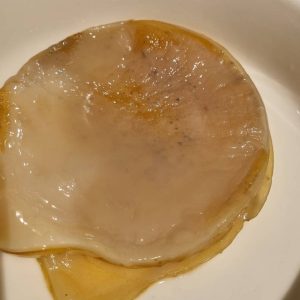
I’m not certain whether that was mould or just heavy yeast activity in one spot, but between the appearance and the smell, I didn’t want to risk it. When in doubt, discard. A SCOBY is replaceable. A batch of kombucha made with a contaminated culture isn’t worth drinking.
If you see fuzzy growth on the top surface, discard the entire batch! Don’t try to scoop it off and continue. Sterilise your jar thoroughly, source fresh starter liquid, and start again. Using more starter liquid next time — at least 200ml per litre — significantly reduces the risk of mould taking hold before your culture establishes itself.
A smell like rotten food rather than sharp vinegar is also a warning sign worth taking seriously. Properly fermenting kombucha smells tangy and slightly sweet. Wrong is a completely different smell, and you’ll know it when you encounter it.
Everything else, the brown, the holes, the uneven growth, the strands underneath, is fine.
How Does a SCOBY Actually Work?
During fermentation, the SCOBY floats on the surface of your sweet tea and does several things simultaneously.
The yeast produces CO2 and a small amount of alcohol as it breaks down the sucrose. The bacteria convert that alcohol into organic acids. The cellulose structure keeps the culture concentrated at the surface, where there’s oxygen. The bacteria need some airflow, which is why you cover the jar with a cloth rather than a sealed lid. And the acidity of the whole system creates an environment hostile to contamination (Jayabalan et al., 2014).
Meanwhile, the culture is growing a new SCOBY layer on the surface. Every batch produces a new “baby” SCOBY on top. Over time, you’ll have a thick stack of them.
One thing worth understanding: the starter liquid (the already-fermented kombucha you add at the start of each batch) is as important as the SCOBY itself. It acidifies the new batch immediately, which helps keep the early fermentation safe before the SCOBY has had time to establish itself. Never start a batch without adequate starter liquid. I use at least 200ml per litre of sweet tea (Crum & LaGory, 2016).
How to Look After Your SCOBY
Keep it fed
A SCOBY that isn’t actively brewing will slowly weaken. If you’re not starting a new batch immediately after harvesting, store it properly rather than leaving it to sit in the finished kombucha. I might be guilty of doing that🫣.
Store it in starter liquid
Place your SCOBY in a clean jar and cover it completely with starter liquid (finished kombucha from your last batch). Cover with a cloth and a rubber band.
At room temperature, this keeps it healthy for up to two weeks. In the fridge, it can stay viable for a month or two, though the cold slows everything down, and you may need a batch or two to get it back to full activity when you return to brewing.
Never use metal
Use clean hands or wooden and plastic tools when handling the SCOBY. Metal can react with the acidic environment over time and harm the culture. This is a simple habit to build from the start.
Use filtered or dechlorinated water
Chlorine in tap water inhibits the bacteria in your SCOBY. Either filter your tap water or leave it uncovered overnight before using it for brewing. This matters more in some areas than others, depending on how heavily chlorinated your local supply is.
Keep it warm
The ideal fermentation temperature is between 21°C and 27°C. Below 18°C, fermentation slows dramatically. Above 30°C, you risk damaging the culture and creating conditions that favour unwanted organisms over your SCOBY’s bacteria.
In winter, this can be a challenge. A warm spot near the oven, a shelf above a radiator, or a heat mat designed for fermentation all work well.
Peel older layers when it gets thick
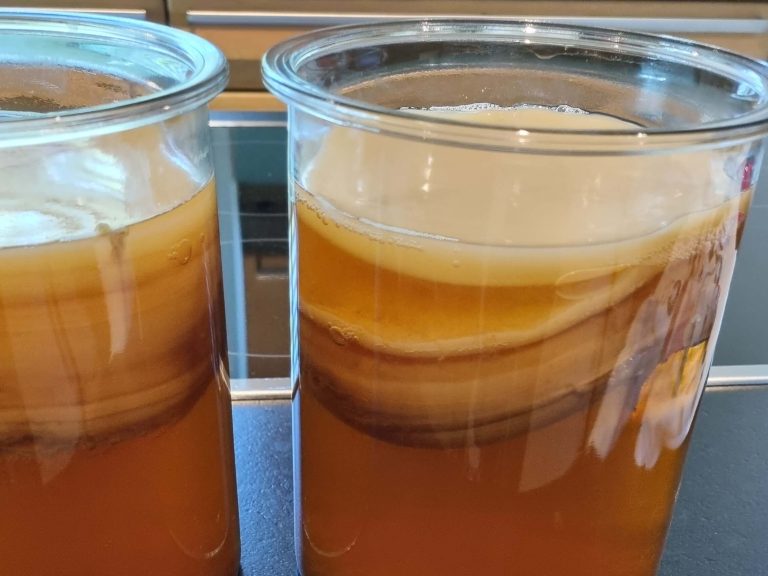
The photo below is from a SCOBY hotel I neglected for a few months, the result was this extra thick, uneven disc that had taken on a life of its own.
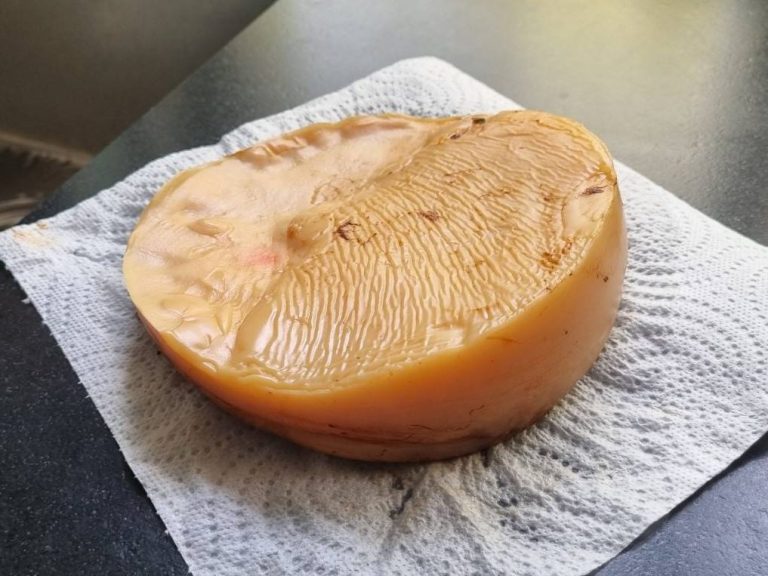
After several batches, your SCOBY will become a thick, heavy disc (multiple fused layers pressed together). The top layers are the newest and most active. Peel away the oldest, darkest layers from the bottom, compost them, and keep the top two or three layers. This keeps the culture active and manageable.
Building a SCOBY Hotel
After a few batches, you’ll have more SCOBY than you need. A SCOBY hotel is simply a large jar where you store the extras submerged in starter liquid. A backup supply that also gives you SCOBYs to share with friends.
Layer your spare SCOBYs into a clean jar, cover completely with starter liquid or finished kombucha, cover with a cloth, and store at room temperature or in the fridge. Top it up every few weeks to keep the culture fed. Remove and compost the oldest, darkest layers monthly.
A healthy hotel means you always have a backup if something goes wrong with a batch, and you’ll never be short of SCOBYs to give away. The kombucha community runs partly on exchanged SCOBYs. It’s one of the nicest things about it😊.
Common SCOBY Questions
Can I use a SCOBY that sank to the bottom?
Yes. A SCOBY that sinks is not a problem — a new one will form on the surface of the liquid within a few days, regardless. The original SCOBY doesn’t need to float to do its job.
My SCOBY is very thin. Is something wrong?
A thin SCOBY usually means the fermentation temperature is too low, or the batch didn’t have long enough to develop a proper new layer. Give it more time and a warmer environment. After a few more batches, it should thicken.
My SCOBY is enormous and very thick. What do I do?
Peel the older bottom layers away and compost them. Keep the top two or three layers. Or split the SCOBY and start a second brewing vessel. Two jars going at once means continuous kombucha with less waiting.
Can I eat a SCOBY?
Yes, SCOBYs are edible. They’re tasteless on their own but can be dehydrated into snacks, blended into smoothies, or fed to chickens and dogs. There’s a small but enthusiastic community of people who cook with them. More on this in a future post.
What if my SCOBY smells wrong?
Finished kombucha and an active SCOBY smells sharp, tangy, and slightly sweet, something like apple cider vinegar but milder. If the smell is genuinely rotten or foul rather than just sharp, that’s a warning sign. Trust your instincts.
How long does a SCOBY last?
Indefinitely, if you look after it. There are brewers maintaining cultures they’ve kept going for years, passing layers to friends and family along the way. A well-maintained SCOBY doesn’t expire.
The Short Version
A SCOBY is a living culture of bacteria and yeast that ferments your sweet tea into kombucha. It’s supposed to look a bit alarming. As long as there’s no fuzzy mould on the top surface and the smell is right, it’s almost certainly fine.
Keep it fed, keep it warm, use filtered water, avoid metal, and peel the old layers when it gets too thick. That’s genuinely all the care it needs.
If your SCOBY is doing something specific that has you worried, drop a comment below or send me a message. I’ve seen most of the things SCOBYs can do, and I’m happy to help you figure out what’s normal and what isn’t.
New to kombucha? Start with my complete beginner’s guide to brewing kombucha at home — it covers everything from equipment to your first harvest.
Sources
Jayabalan, R., Malbaša, R. V., Lončar, E. S., Vitas, J. S., & Sathishkumar, M. (2014). A review on kombucha tea — microbiology, composition, fermentation, beneficial effects, toxicity, and tea fungus. Comprehensive Reviews in Food Science and Food Safety, 13(4), 538–550. https://doi.org/10.1111/1541-4337.12072
Marsh, A. J., O’Sullivan, O., Hill, C., Ross, R. P., & Cotter, P. D. (2014). Sequence-based analysis of the bacterial and fungal compositions of multiple kombucha (tea fungus) samples. Food Microbiology, 38, 171–178. https://doi.org/10.1016/j.fm.2013.09.003
Villarreal-Soto, S. A., Beaufort, S., Bouajila, J., Souchard, J. P., & Taillandier, P. (2018). Understanding kombucha tea fermentation: a review. Journal of Food Science, 83(3), 580–588. https://doi.org/10.1111/1750-3841.14068
Crum, H., & LaGory, A. (2016). The big book of kombucha. Storey Publishing.