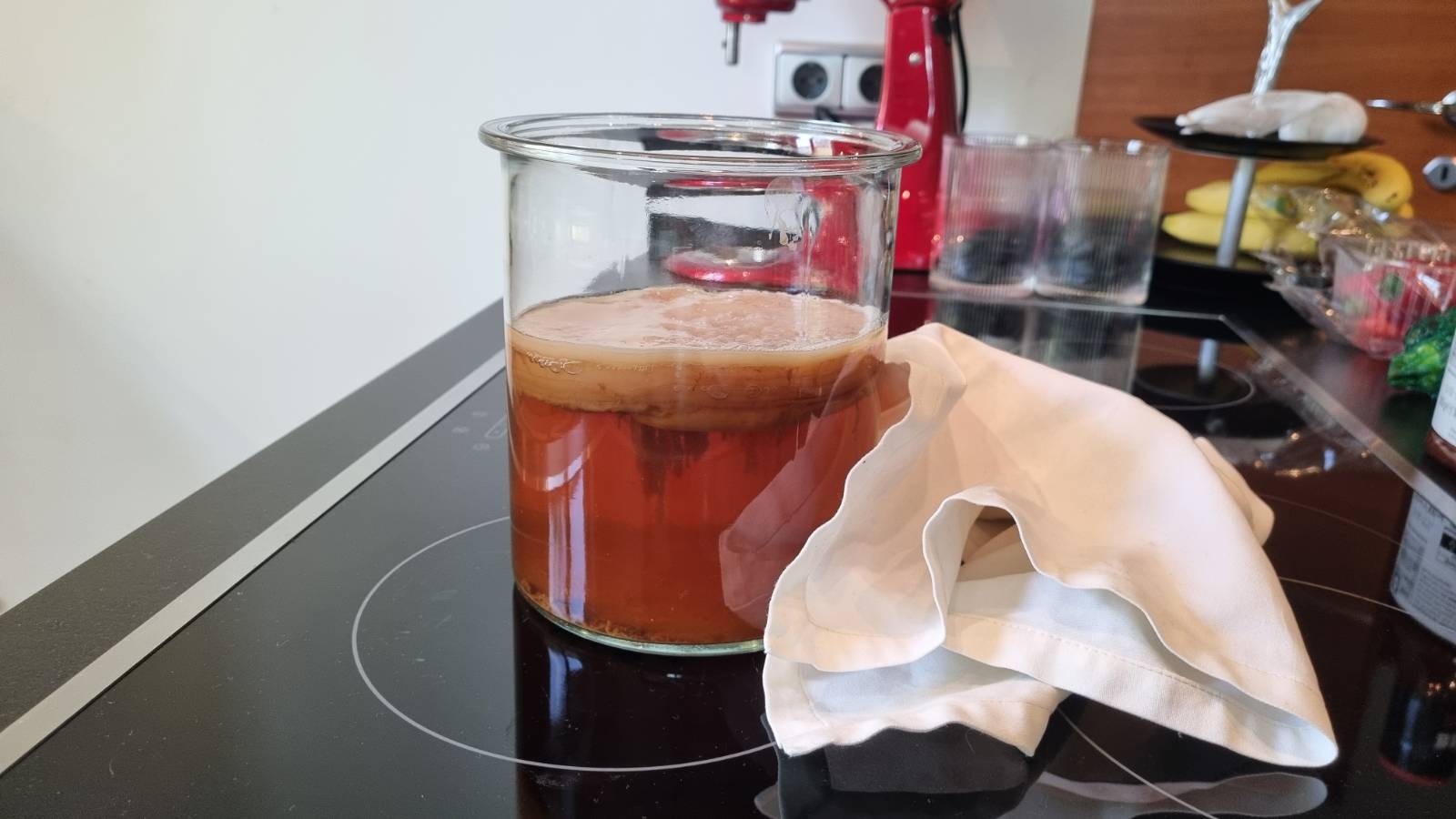
What Does a Healthy kombucha SCOBY Look Like?
If you’ve been brewing kombucha for more than one batch, you’ve probably had a moment of standing over your jar wondering if what you’re looking at is normal.
The short answer is almost certainly yes.
SCOBYs are genuinely strange-looking things. They don’t behave like other kitchen ingredients. They grow in unpredictable shapes, develop patches and spots, sprout stringy bits underneath, and change appearance from batch to batch. Most of what looks alarming is completely fine.
This post is a visual and practical guide to what a healthy kombucha SCOBY looks like at every stage, what’s normal, what’s harmless but worth knowing about, and the one thing that actually signals a problem.
If you want to understand what a SCOBY actually is and how it works, read my full SCOBY guide first. This post focuses specifically on appearance.
What a Fresh SCOBY Looks Like
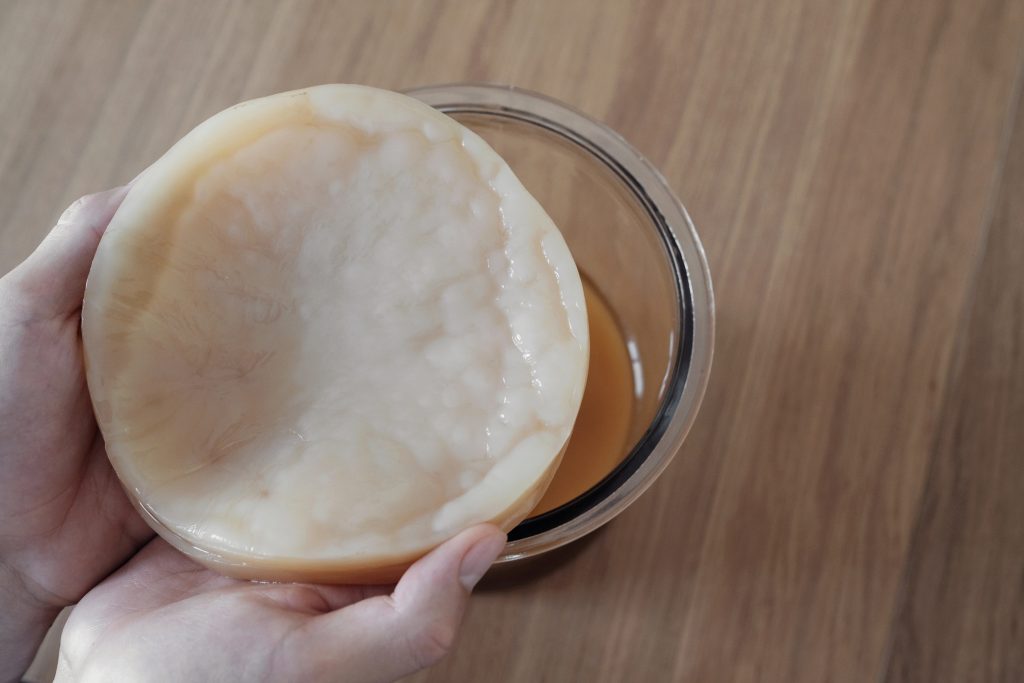
A brand new SCOBY — either one you’ve just received or the first one grown from a new batch — tends to be:
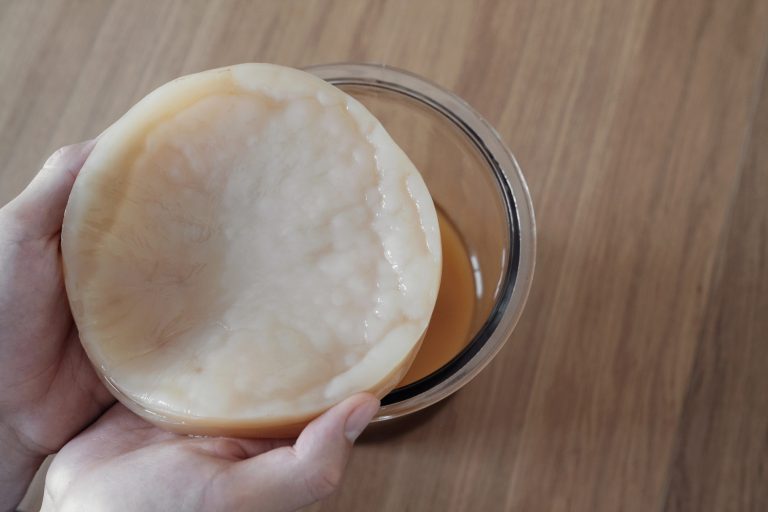
Pale and almost translucent. Fresh SCOBYs have a whitish or very light tan colour. You can sometimes see through thin sections of them. This is normal and expected.
Thin. A first-batch SCOBY is often only a few millimetres thick. It will build up over successive batches as each brew grows a new layer on top.
Slightly uneven. Even new SCOBYs are rarely perfectly uniform. Some areas will be thicker than others. The edges may be thinner or frilled. This is how they grow.
Rubbery and firm. A healthy SCOBY has some resistance to it. It shouldn’t feel slimy, mushy, or fall apart when you handle it. Firm and slightly slippery is normal.
What a Healthy Kombucha SCOBY Looks Like After Several Batches
This is where most of the anxiety comes from. After a few batches, your SCOBY will look noticeably different from when you started, and almost all of those differences are completely fine.
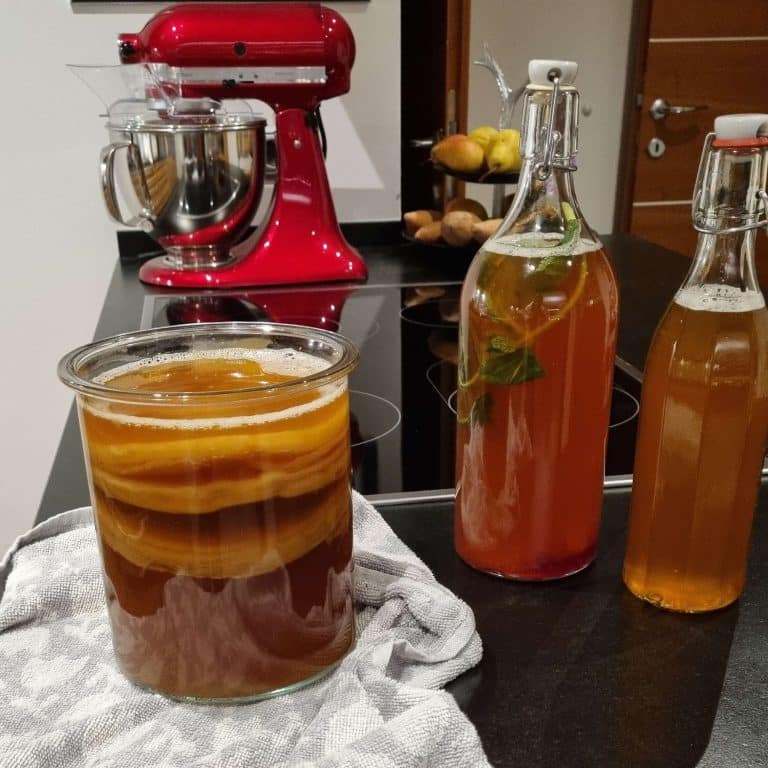
It gets darker
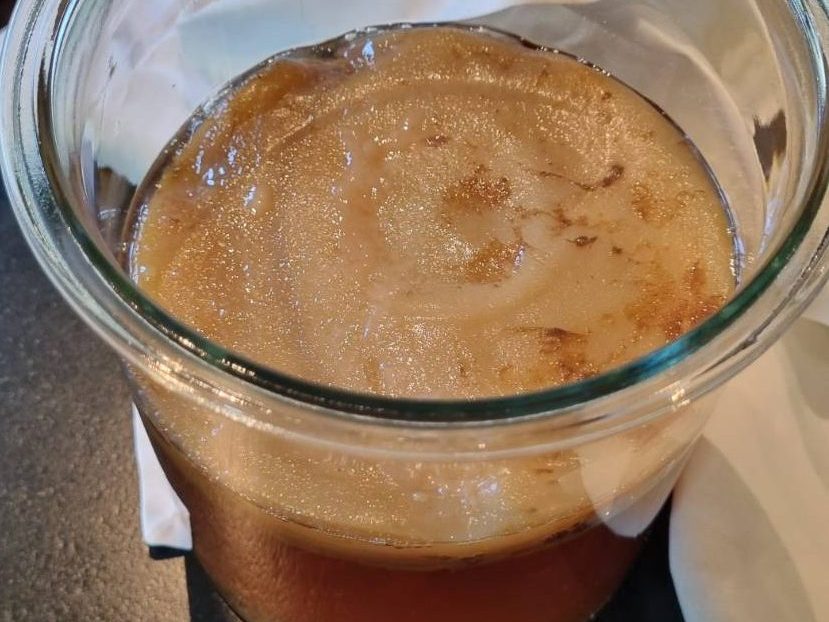
The colour deepens from pale tan to medium brown over successive batches. The tannins in the tea stain the SCOBY over time. A SCOBY that has been brewing for months will be a deep brown colour. This is one of the most common things people worry about and one of the least meaningful.
It gets thicker
Every batch grows a new layer of SCOBY on the surface of your brew. After several batches you’ll have a thick disc made of multiple fused layers. This is healthy and expected. Once it gets very thick (more than 3–4cm), you can peel away the oldest bottom layers and compost them. The top layers are the most active.
It develops patches and spots
Darker patches, lighter patches, and slightly raised or indented areas are all normal. These reflect variations in yeast activity across the surface of the SCOBY. Areas with more yeast activity tend to be darker and thicker.
It grows unevenly
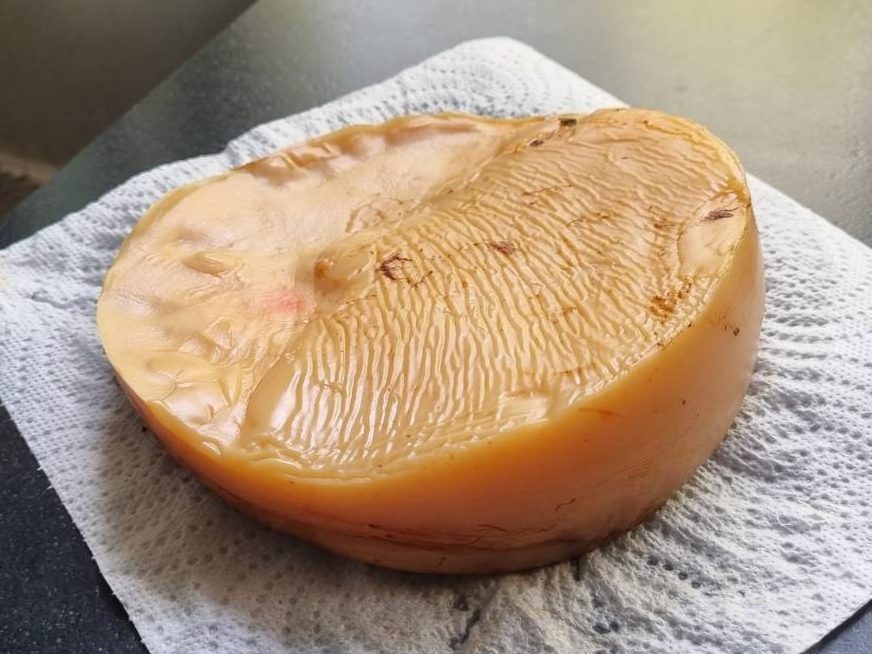
SCOBYs rarely form perfect uniform discs. One side may be thicker than the other. The edges may be thicker or thinner than the centre. There may be lumpy growths or frilled edges. All of this is normal growth and has no effect on fermentation quality. This image of my SCOBY might be an extreme example, but it can happen.
It develops holes
Holes and gaps in the SCOBY structure are common, especially in older SCOBYs. They don’t affect the SCOBY’s ability to ferment. The culture doesn’t need to be a solid disc to work effectively.
It grows baby SCOBYs
Thin, new SCOBY layers forming on the surface of your brew are a sign of a healthy, active culture. These baby layers are the newest and most active part of your culture. Over time, they fuse with the main SCOBY disc and become part of it.
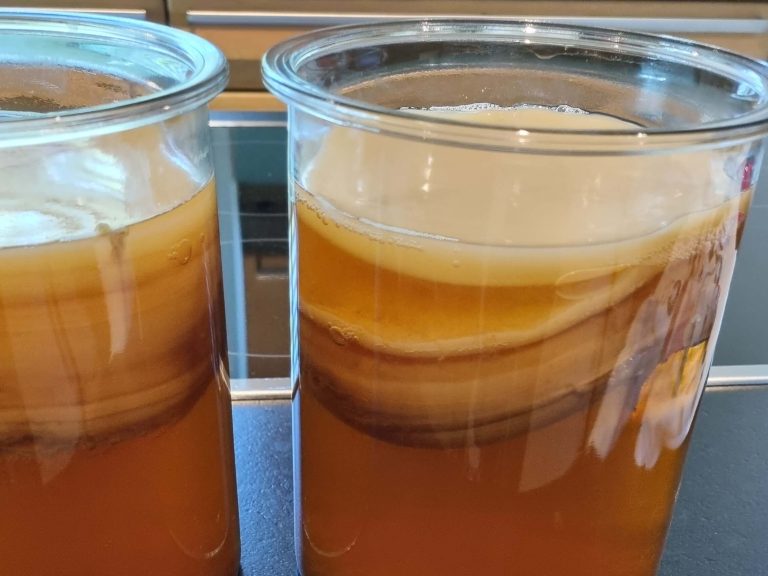
It has brown strands underneath

This is one of the things that surprises new brewers most. The brown, stringy material hanging into the liquid underneath the SCOBY is yeast. It collects under the SCOBY and hangs down into the brew in strings and clumps. It looks a bit alarming the first time you see it. It’s completely harmless and actually a sign of active fermentation (Marsh et al., 2014).
You can strain these out when bottling if you prefer a cleaner result. Some brewers like to leave them in since the yeast contributes to second fermentation carbonation. I usually strain them. I don’t mind it myself, but my family is not too keen on the yeast strands in their drink. And they looked quite perplexed that this is what they are drinking when I showed them this batch with the strands😅.
What a SCOBY Looks Like When Something Is Actually Wrong
After all of that reassurance, here is the one thing to genuinely watch for.
Fuzzy mould on the top surface.
Mould on a SCOBY is fuzzy. It’s the kind of growth you’d recognise from a forgotten piece of bread or fruit — raised, fluffy, clearly growing upward from the surface. It can be green, black, pink, or white. The key characteristic is the texture: fuzzy rather than flat.
This is different from:
- Flat dark patches (yeast activity, normal)
- Brown spots (tea staining, normal)
- White or cream flat patches (new SCOBY growth, normal)
- Brown stringy bits underneath (yeast strands, normal)
If you see fuzzy mould on the top surface of your SCOBY, discard the entire batch. Don’t try to remove the mould and continue. Sterilise your jar thoroughly, source fresh starter liquid, and start again. The most reliable way to prevent mould is to use generous amounts of starter liquid (at least 200ml per litre), which acidifies the new batch immediately and creates an environment that discourages contamination.
A smell like genuine rot rather than sharp vinegar is also a warning sign. If the smell makes you recoil rather than just wrinkle your nose at the sharpness, trust that instinct. It hasn’t happened to me often, but when it does, the smell is immediately distinctive. You won’t mistake it for normal fermentation.
A Quick Reference Guide
Normal — don’t worry:
- Pale, translucent appearance (fresh SCOBY)
- Darkening to tan and brown over time
- Uneven thickness and irregular shape
- Holes and gaps in the structure
- Brown or dark patches on the surface
- Flat white or cream patches (new growth)
- Brown stringy strands underneath
- The SCOBY floating sideways or sinking
- Multiple layers fused together
- Frilled or uneven edges
- Baby SCOBY layers forming on the surface
Worth watching:
- Very dark or black flat patches that have appeared suddenly (likely fine but monitor)
- An unusual smell that’s different from normal sharp vinegar
- SCOBY that feels mushy or falls apart (may indicate a stressed culture — check temperature and starter liquid quantity)
Discard and start again:
- Fuzzy mould of any colour on the top surface
- Smell like genuine rot rather than sharp vinegar
Here’s the same information as a printable visual guide:
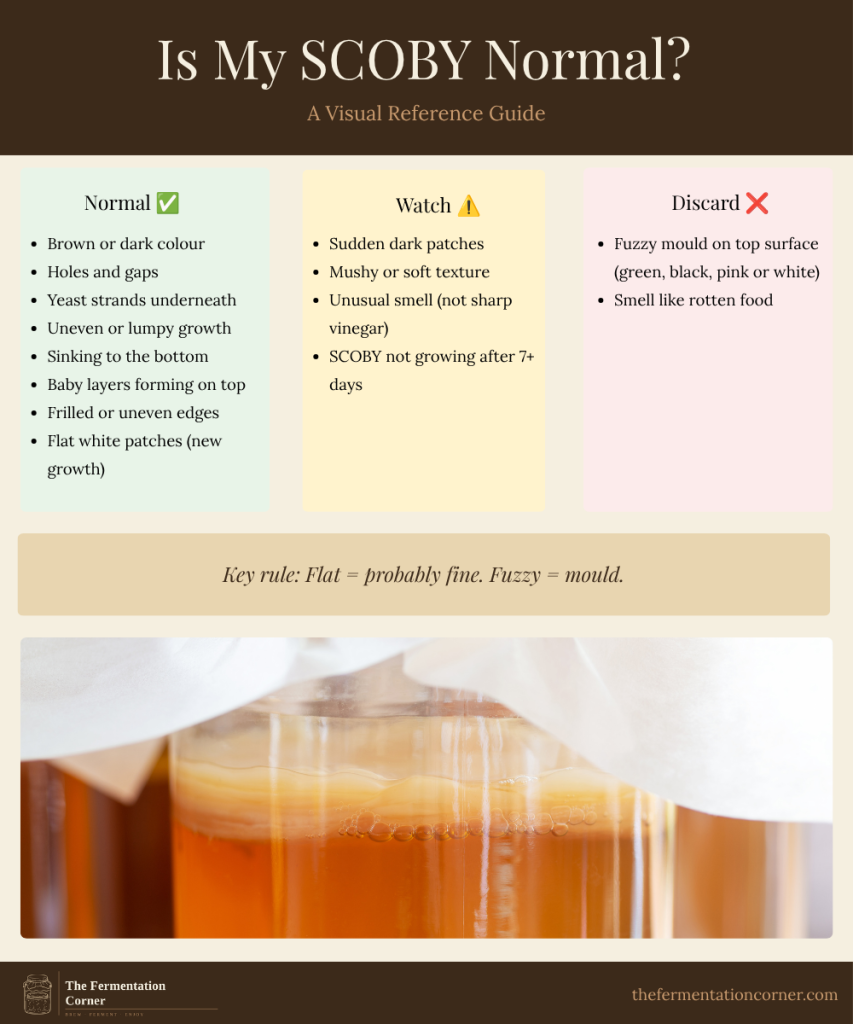
The One Rule Worth Remembering
If it’s flat and it’s on the SCOBY, it’s almost certainly fine.
If it’s fuzzy and growing upward from the surface, that’s mould.
Everything else — the brown, the spots, the holes, the strange shapes, the strands underneath — is a healthy, active culture doing exactly what it’s supposed to do.
SCOBYs are not supposed to be pretty. They’re supposed to make great kombucha. And the ones that look the most alarming are often the most active😉.
When to Get a New SCOBY
Occasionally, a SCOBY does reach the end of its useful life, though this is less common than people think. Signs that a SCOBY is genuinely struggling rather than just looking odd:
It consistently produces kombucha that won’t ferment properly despite good conditions (right temperature, adequate starter liquid, correct tea and sugar). After two or three batches with no improvement, the culture may be weakened.
It’s very old and dark, and despite regular peeling of old layers, the fermentation has slowed significantly. A fresh SCOBY or a younger layer from a SCOBY hotel will reinvigorate your brew.
In practice, most SCOBYs kept in decent conditions continue working indefinitely. The culture renews itself with every batch through the new layers that grow on the surface.
Worried about something specific your SCOBY is doing? Drop a comment below with a description, and I’ll help you figure out whether it’s normal. I’ve seen a lot of what SCOBYs can do.
For the full guide to SCOBY care, including storage, temperature, and building a SCOBY hotel, read my complete SCOBY guide.
New to kombucha? Start with my beginner’s brewing guide.
Sources
Marsh, A. J., O’Sullivan, O., Hill, C., Ross, R. P., & Cotter, P. D. (2014). Sequence-based analysis of the bacterial and fungal compositions of multiple kombucha (tea fungus) samples. Food Microbiology, 38, 171–178. https://doi.org/10.1016/j.fm.2013.09.003
Jayabalan, R., Malbaša, R. V., Lončar, E. S., Vitas, J. S., & Sathishkumar, M. (2014). A review on kombucha tea — microbiology, composition, fermentation, beneficial effects, toxicity, and tea fungus. Comprehensive Reviews in Food Science and Food Safety, 13(4), 538–550. https://doi.org/10.1111/1541-4337.12072